
We’ve all heard it from trainers or motivational posts:
“Go in there with total confidence”
“You just need to believe in yourself”
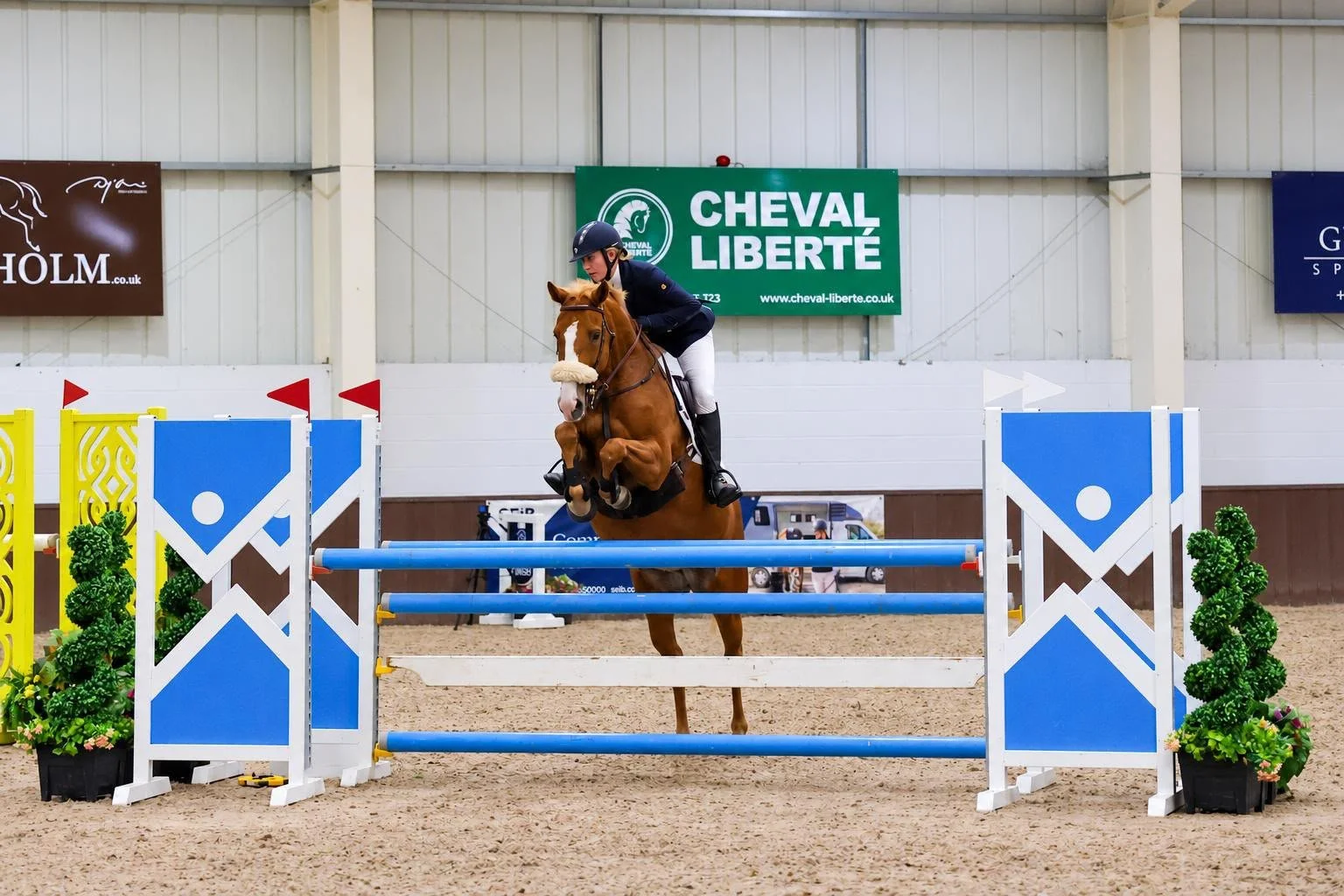
It sounds great on paper. But when you are sitting at the gate, listening to the bell ring, and your stomach is doing flips, those words feel completely empty. You look at other riders who appear cool, calm, and collected, and you assume you aren't ready for this.
When we tell ourselves we must feel confident to succeed, we accidentally create a secondary layer of anxiety.
Imagine this scenario: You arrive at a show, and you feel nervous. Because you believe nerves are the enemy of success, you start panicking about being nervous. Your internal monologue shifts from the course map to a frantic spiral: “Why am I shaking? I’m supposed to feel confident. If I feel like this now, our round is going to be a disaster.”
By chasing an elusive emotional state, you waste critical mental energy trying to fight your current reality.
Here is the truth: Waiting until you "feel confident" to ride a great round is a trap.
We often mistake confidence for a fleeting emotional state—like feeling calm, fearless, or untouchable. But those emotional feelings are wildly unreliable. They change with a bad transition in the warm-up or the look of the first fence. If your performance relies on a fluctuating mood, your results will always be inconsistent.
True confidence isn't an emotion at all; it is a mindset built on logic and preparation. It is the practical knowledge that you have the skills to execute a task, even when your nervous system is firing off alarms. You can feel entirely terrified while still knowing you are capable of jumping the course.
To break through your performance plateaus, you don’t need more confidence. You need a system that works even when you are feeling your nerves.
Shift Your Focus: Strategy Over Sentiment
The most successful sports psychologists don’t teach athletes how to eliminate fear; they teach them how to perform with it. Confidence isn’t the prerequisite for a great round—it is the byproduct of a great round.
At Pendley Performance, I train riders to trade unpredictable emotions for three practical, cognitive pillars: Clarity, Routine, and Discipline.
1. Absolute Clarity
Confidence is vague, but clarity is precise. Instead of trying to force a feeling of power, give your brain a highly specific, mechanical job. Before you enter the ring, focus entirely on the logistics of your track:
Where am I establishing the rhythm?
What line am I taking to ensure a straight approach?
Where can I use a deep exhale to reset our balance?
2. A Non-Negotiable Routine
Anxiety thrives on chaos and the unknown. Developing a rigid, predictable pre-class routine signals safety to your nervous system. Whether you are at home or a major show, keep your timing, your warm-up sequence, and your breathing exercises identical. Your brain will recognize the familiarity and automatically settle into "work mode."
3. Execution Discipline
Discipline is the ability to follow through on your plan regardless of how you feel. If your brain screams that the fences look huge today, discipline means acknowledging the thought and focusing on your plan. Action precedes emotion. You do not have to feel brave to put your leg on. Every time you execute a movement despite your fear, you provide your brain with the logical evidence it needs to build genuine self-trust.
The Formula for Real Performance
Stop waiting for the day when show-ring nerves magically disappear. They might never completely go away—and that is perfectly okay.
Great rounds are ridden by anxious riders every single weekend. They succeed because they have trained their minds to rely on strategy over sentiment. When you focus on clarity of your plan, consistency of your routine, and the discipline of your execution, you create a baseline of performance that feelings cannot touch.
True mental edge isn’t the absence of fear. It is knowing that even when your heart is racing, your system is robust enough to deliver.
Build Your Bulletproof Mental Edge
If you are tired of letting your emotions dictate your performance, it is time to move away from generic advice and start building an evidence-based framework.
At Pendley Performance, I design customised, practical mindset strategies to help competitive equestrians bridge the gap between training and competition.
Ready to ride with absolute intent? Click here to book your free discovery call today, and let's build your system together.