
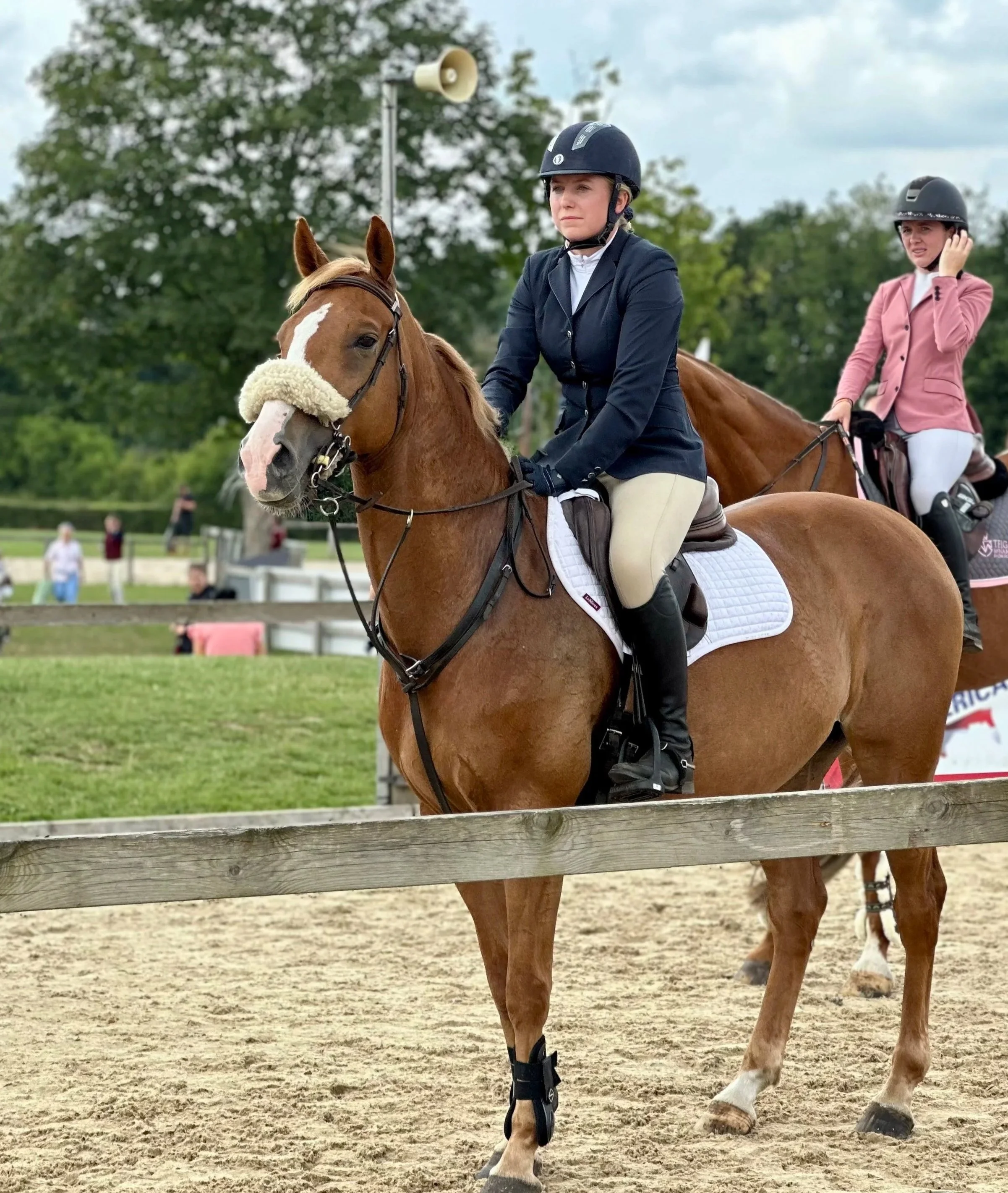
Hi, I’m Seraphina.
I’m Phinie, an equestrian performance coach focused on confidence and competition. I work with riders who want to perform more consistently under pressure, using evidence-based sport psychology adapted specifically to the demands of riding and competition.
My work focuses on helping riders build confidence, manage nerves, stay focused, and translate their training into performance when it matters most - whether that’s in training, at local competitions or higher-level sport.
Background in equestrian sport
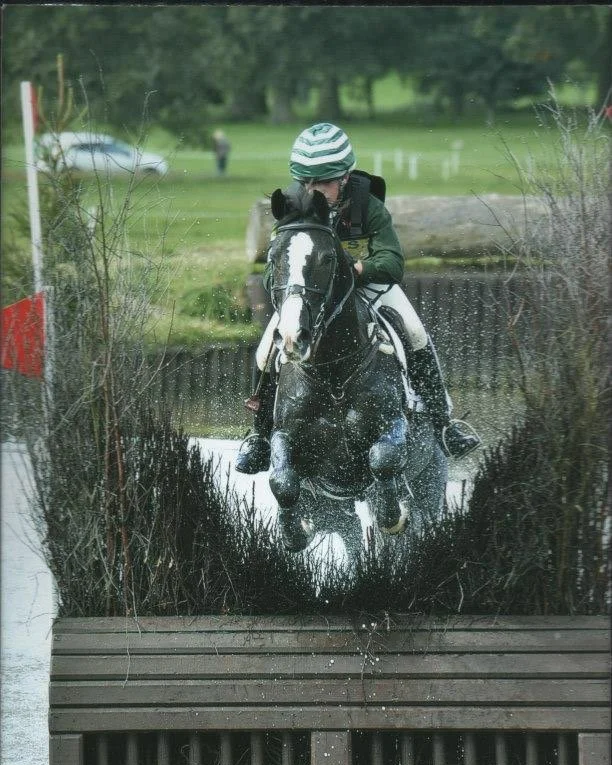
Horses have been a central part of my life from a young age. I spent many years pursuing competitive success in eventing, competing internationally and training within high-performance environments both in the UK and abroad.
Those experiences gave me first-hand insight into the demands of elite sport — the expectations, the pressure to perform, and the fine margins that often separate preparation from results. I experienced the same challenges many riders face: balancing ambition with consistency, and learning how pressure can influence both decision-making and performance in the ring.
The turning point
As my riding developed, it became increasingly clear that ability and preparation alone were not enough. Despite strong training and commitment, pressure and nerves were becoming a barrier to performing at my best in competition.
I recognised that the challenge wasn’t a lack of talent, but the way I was thinking, responding to pressure, and approaching both training and competition. Understanding and improving the mental side of performance became essential — not only to progress as a rider, but to enjoy the process and perform with clarity and confidence.
That realisation marked a turning point, shaping the direction of my work and ultimately leading me to study the psychology behind performance.
Formal training in psychology and sports psychology
Following that shift in focus, I chose to study psychology in order to better understand the factors influencing performance under pressure. I completed a BSc in Psychology, followed by an MSc in Sport Psychology, with the aim of developing a structured, evidence-based understanding of how mindset, confidence, focus, and emotional regulation affect performance.
My academic training provided a framework for analysing performance challenges objectively and translating theory into practical strategies that riders can use in real training and competition environments. It also reinforced the importance of individualised support — recognising that performance challenges rarely have a one-size-fits-all solution.
This combination of lived experience in equestrian sport and formal training in sport psychology underpins how I work with riders today: practical, grounded, and focused on skills that can be applied when pressure is highest.
Coaching philosophy and approach
My approach to performance coaching is practical, evidence-based, and tailored to the individual rider. I draw on sport psychology principles to help riders develop the mental skills that support confident, focused, and consistent performance - particularly in high-pressure environments such as competition.
Rather than relying on generic motivation or positivity, coaching focuses on understanding how each rider thinks, responds to pressure, and processes mistakes. From there, we work on developing strategies for managing nerves, maintaining focus, regulating emotions, and building effective routines that support performance in both training and competition.
Coaching is non-clinical and skills-based. The aim is to equip riders with tools they can apply independently, so confidence and clarity are sustained over time rather than dependent on external reassurance.
This work is always grounded in the realities of equestrian sport, where performance is influenced not only by mindset, but by the dynamic relationship between rider, horse, and environment.
Who I Work With
I work with riders who are committed to improving their performance and want a more consistent experience in training and competitions.
Amateur Riders
Juniors and their Parents
Semi-professional riders
While riders come from a range of disciplines and experience levels, a common thread is a desire to understand their performance more deeply and develop mental skills that support both progress and enjoyment of the sport.
Integrating performance coaching with ridden coaching
For some riders, performance coaching works best when mental skills are applied directly within ridden sessions. Where appropriate, mindset and performance work can be integrated into showjumping coaching, allowing strategies around focus, confidence, decision-making, and pressure to be practised in real time.
This integration helps riders understand how their mindset influences their riding in the moment — how they approach a fence, respond to mistakes, or reset between efforts. It also supports the transfer of mental skills from discussion into action, so strategies developed off the horse are reinforced in training and competition environments.
Ridden coaching is not a requirement for performance coaching, but it can be a valuable option for riders who benefit from applying mindset work directly in the saddle.
Current practice and training environment
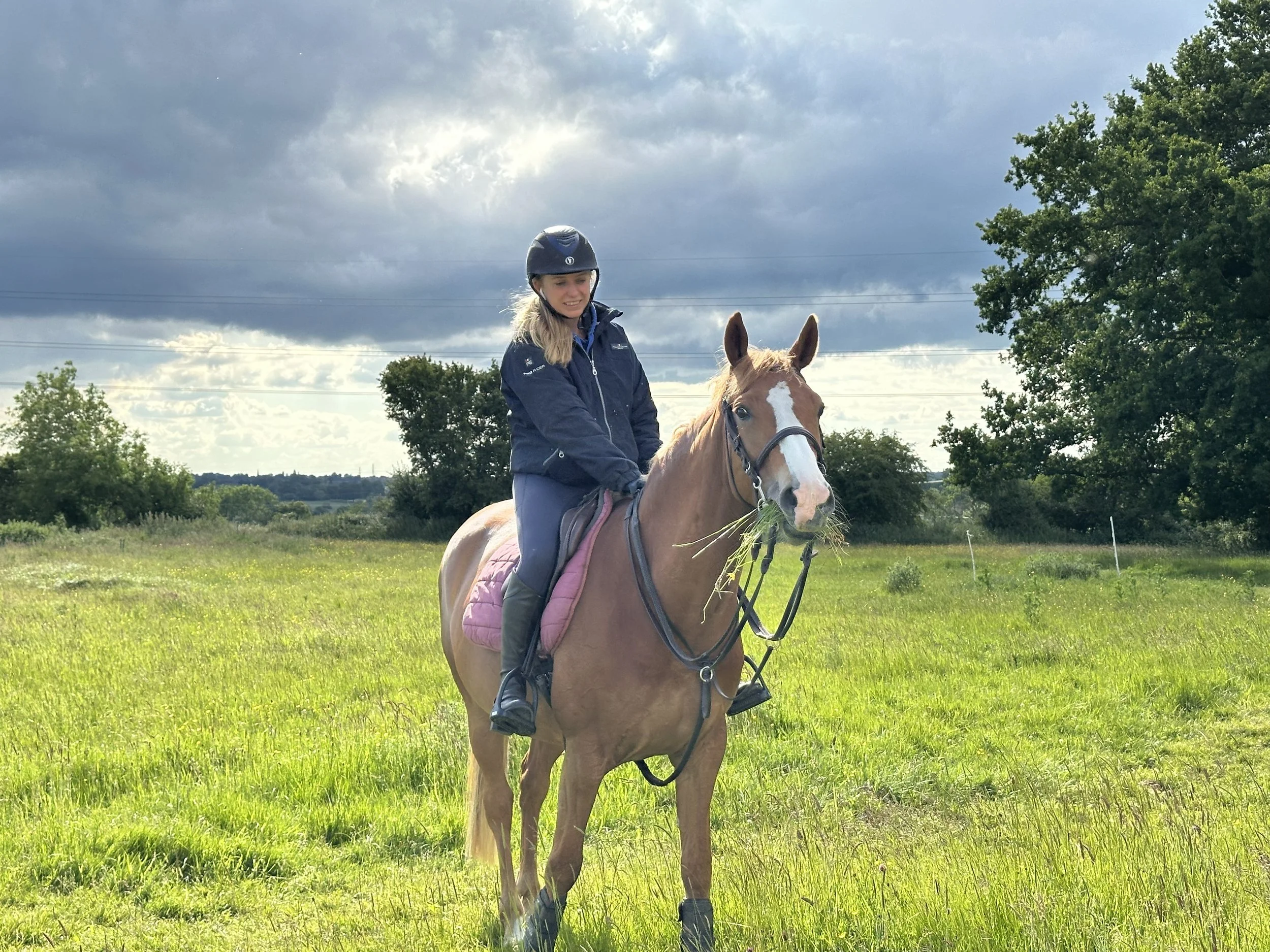
Alongside performance coaching, I run a private family yard where I produce and compete a small number of showjumping horses. This ongoing involvement keeps my work closely connected to the realities of training, competition schedules, and the day-to-day challenges riders face.
I also offer showjumping coaching, schooling and competition riding, and livery services. Remaining actively involved in the sport ensures that my coaching stays relevant, practical, and informed by current equestrian environments rather than theory alone.
This combination of performance coaching and hands-on involvement allows me to support riders with an understanding of both the mental and practical demands of equestrian sport.