
Why Do I Freeze in the Competition Ring?
How to Reset Your Brain and Ride with Intent
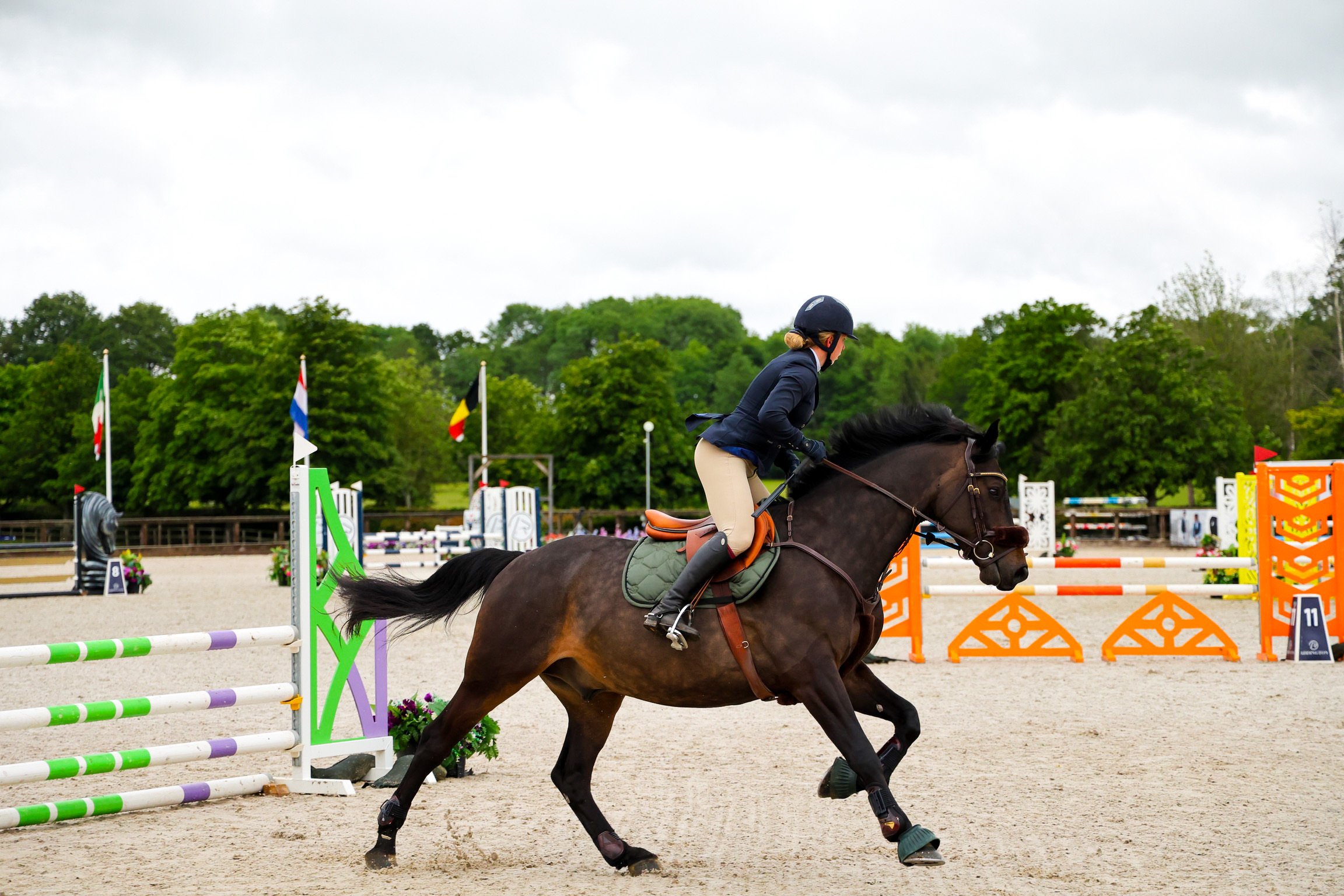
You’ve spent months training. Your horse is listening, your distances are coming up perfectly, and your transitions are effortless. Your coach looks on, completely confident that you are ready for your upcoming competition.
But then, you arrive at the show.
As you wait for your turn to enter the ring, something shifts. Your heart starts hammering against your ribs. Your hands feel heavy and your body feels rigid. Your brain feels overwhelmed. The moment the bell goes, your plan flies out of the window. Instead of riding with the rhythm and intent you had at home, you find yourself over-riding, panicking, or completely freezing up before a fence.
If this sounds familiar, you aren't a bad rider, and you haven't lost your talent. What you are experiencing is a physiological survival response, and understanding how to reset it is the key to unlocking your true performance.
The Science of 'Ring Panic': What is Happening to Your Brain?
When you compete, your brain perceives the pressure—the judges, the crowd, the fear of making a mistake—as a literal threat to your safety.
Your nervous system immediately kicks into Fight, Flight, or Freeze mode.
The Physical Reaction: Your brain floods your body with adrenaline and cortisol. This causes your muscles to tighten, shortens your breathing, and narrows your vision.
The Impact on the Horse: Because horses are incredibly sensitive prey animals, they pick up on your elevated heart rate and muscle tension instantly. If your body is screaming "danger," your horse will mirror that anxiety, either rushing, backing off your leg, or looking for an escape.
To ride at your best under pressure, you cannot just "try harder." You have to consciously signal to your brain that you are safe.
3 Actionable Sports Psychology Steps to Reset in the Saddle
1. The 60-Second Warm-Up Box Breathing Reset
Don't let your mind spiral while walking on a long rein in the warm-up. Use a technique called Box Breathing to reset your autonomic nervous system and lower your heart rate.
Inhale deeply through your nose for a count of 4.
Hold your breath calmly for a count of 4.
Exhale slowly through your mouth for a count of 4.
Hold empty for a count of 4 before your next breath.
Why it works: Repeating this cycle 3 to 4 times alerts your brain that you are not in physical danger. It instantly releases the subconscious jaw, shoulder, and forearm tension that causes a horse to back off the leg or feel restricted through the bridle.
2. Anchor Your Focus Externally
When anxiety hits, our focus tends to turn inward ("What if I mess up? What if we stop?"). Shift your attention to a physical, external anchor. Instead of thinking about the height of the fence or the judges, focus entirely on the rhythm of your horse’s stride. Count the rhythm silently in your head: “One, two, three, four.” Giving your brain a mechanical task prevents it from spiralling into panic.
3. The Post-Mistake Rule
A single bad distance or a pole down does not have to dictate your entire round. If something goes wrong, give yourself exactly three seconds to register it, then consciously execute a "mental delete." Exhale sharply, sit up tall, and focus entirely on the next turn. Ride the horse you have in this exact second, not the mistake you made five seconds ago.
Develop Your Bulletproof Mental Edge
Riding is a unique partnership where your mental state directly dictates your horse's physical performance. Technical talent will only take you so far if your mindset isn't trained to handle high-pressure environments.
At Pendley Performance, we work together to build evidence-based mental frameworks that help competitive equestrians bridge the gap between training and competition
Are you ready to stop letting nerves dictate your results?
Reach out below for a free discovery call to explore how we can work together to move towards you feeling calm, focused, and riding with absolute intent.